
African Food Meets the Scottish Larder
What does Africa have to do with the Scottish larder?
More than you might imagine.
When Farin Road began exploring modern African cooking in Scotland, one of the biggest questions wasn't technique.
It was ingredients.
Certain African ingredients can be difficult to source consistently. Others travel enormous distances before reaching a Scottish kitchen.
Eventually, that challenge led to a different question:
Instead of asking what Scotland doesn't have, what if we looked at what it does?
And Scotland has an extraordinary larder.
Start with the produce
Scottish beef and lamb need little introduction.
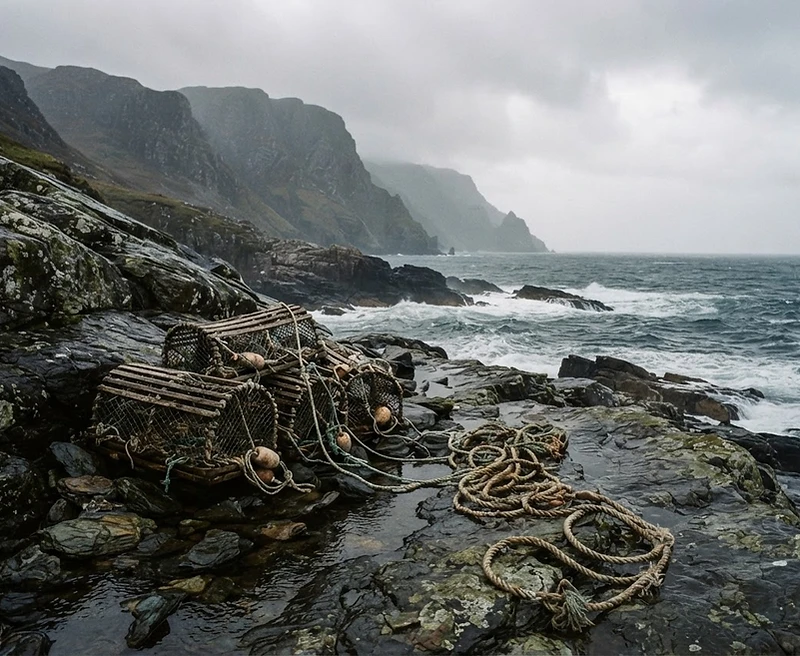
Then there is venison, game, root vegetables, brassicas, berries, oats, dairy and an extraordinary coastline producing everything from mackerel and mussels to scallops and lobster.
These ingredients might sound far removed from African cooking.
But cuisine isn't simply a list of ingredients.
It is also what you do with them.
Take Scottish lamb.
Put it alongside North African flavours—cumin, coriander, chilli, preserved lemon and chermoula—and suddenly that familiar ingredient tells a different story.
Take mackerel from Scottish waters and introduce smoke, pepper and West African seasoning.
Or imagine beautiful Scottish root vegetables transformed through harissa, suya spices or East African aromatics.
The ingredient remains Scottish.
The flavour journey travels much further.
This isn't about replacing African ingredients
There is an important distinction.
Using Scottish produce should never become an excuse to strip African food of its identity.
Some ingredients and techniques are fundamental.
If removing something means removing the soul of the dish, we shouldn't remove it simply because another ingredient is more convenient.
Instead, the interesting question is:
What must remain—and where can we play?
That is where cooking becomes exciting.
Scotland has always absorbed ideas
We sometimes talk about cuisines as though they exist behind borders.
They don't.
Food travels constantly.
Scotland's own food culture reflects centuries of trade, immigration, agriculture and changing tastes.
African cuisines tell similar stories.
Tomatoes and chillies, now fundamental to numerous African dishes, originated outside Africa.
Tea travelled.
Coffee travelled.
Spices travelled.
People travelled.
Cuisine changed with them.
So when African flavour meets Scottish produce, Farin Road isn't trying to create something without precedent.
We are continuing something food has always done.
Adapt.
A Scottish ingredient doesn't have to taste traditionally Scottish
This may be the part we find most interesting.
A carrot grown a few miles from Edinburgh doesn't know that it is supposed to be served in a particular way.
Neither does a Scottish scallop.
Or lamb.
Or cabbage.
Ingredients don't have culinary passports.
Chefs give them direction.
That allows us to ask questions.
What happens when Scottish seafood encounters West African pepper?
Could local grains be interpreted using an African cooking technique?
Could a familiar Scottish vegetable become the centre of a dish rather than an accompaniment once treated with African spices?
Sometimes the answer works.
Sometimes it doesn't.
Experimentation is part of the journey.
Two places on one plate
Farin Road isn't interested in fusion simply for novelty.
Putting two cuisines together doesn't automatically make something interesting.
There has to be a reason.
For us, that reason is our story.
Farin Road grew in Scotland from African roots.
So naturally the food looks in both directions.
Africa gives us an enormous library of flavours, techniques and stories.
Scotland gives us remarkable produce and the place in which we cook.
Where those two things meet is where Farin Road becomes most interesting.
Not African food pretending to be Scottish.
Not Scottish food dressed up as African.
Something in between.
African flavour. Scottish produce. One evolving story.


